Does DSCR Include Taxes and Insurance? What Counts in the Ratio
Does DSCR include taxes and insurance? Yes, plus principal and HOA dues, using gross rent. See which real costs lenders leave out of the ratio and why.
By the DSCRLoanCalculator.org team
Does DSCR include taxes and insurance? Yes, it includes both, and it includes principal and interest too, but it does not include CapEx. Most people land here for one of those three answers, so there they are. The longer version: a residential DSCR is gross monthly rent divided by PITIA, and PITIA means principal, interest, taxes, insurance and association dues. Vacancy, management, repairs and capital expenditure are real costs, but they sit outside the ratio your lender quotes.
That gap is why your number and the underwriter’s number disagree. The formula guide walks the arithmetic step by step. This page settles the inclusion questions line by line.
The two halves of the ratio
Top half: rent. One number, before any expense comes out of it.
Bottom half: the full monthly housing payment. Not just the mortgage. Everything the lender expects to be paid each month to keep the property taxed, insured and in good standing with its association.
Here is the site’s default property, a $500,000 rental that leases for $4,000 a month, with 25% down, a $375,000 loan at 7.5% over 30 years, $6,000 a year of taxes and $2,500 of insurance.
- Principal and interest: $2,622
- Property taxes, $6,000 a year: $500
- Insurance, $2,500 a year: $208
- HOA dues: $0
- PITIA: $3,330
- DSCR: $4,000 / $3,330 = 1.20
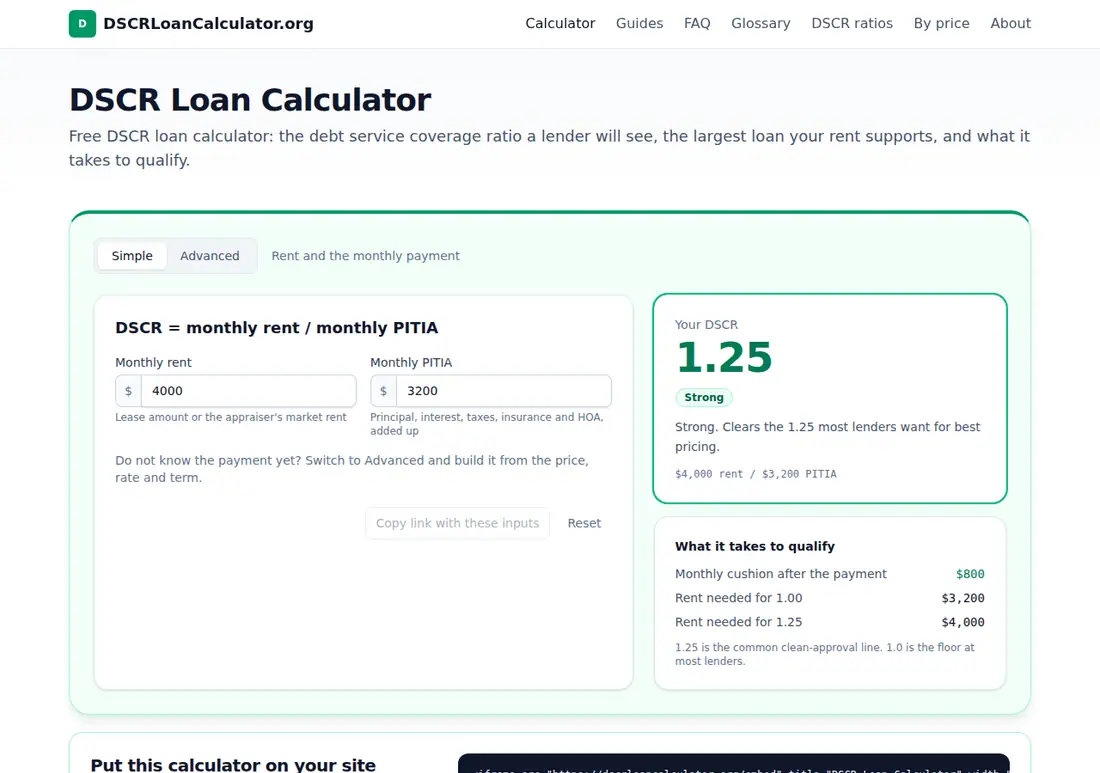
Nothing else goes in. No vacancy allowance, no management fee, no repair budget, no set aside for the roof. The simple tab on the calculator makes the same point in fewer steps: $4,000 of rent against a $3,200 PITIA payment is a DSCR of 1.25.
PITIA: the A is the part people miss
PITIA is PITI with association dues added. Principal, interest, taxes, insurance, association. Plenty of lending material still says PITI, because many single family homes have no HOA. Rentals in condo buildings, townhouse rows and newer subdivisions usually do, so DSCR programs quote PITIA.
Why do taxes and insurance join the payment? Because the lender treats them as non optional. Unpaid property tax becomes a lien that outranks the mortgage. A lapsed home insurance policy leaves the collateral exposed. Most DSCR loans escrow both, so the lender collects them with the payment and pays the bills. Anything the lender pays every month belongs in the monthly obligation.
HOA dues follow the same logic, since unpaid dues can also turn into a lien. Dues are also the one line you cannot shop.
Gross rent or net rent: what lenders actually use
Residential DSCR uses gross rent, the rent before a single expense comes out. For a leased property that is the lease rent. For a vacant one it is the appraiser’s market rent. When both exist, most lenders take the lower of the two.
Net rent belongs to a different formula. Commercial lenders and finance textbooks define DSCR as net operating income divided by annual debt service, where NOI is rent after vacancy, management, repairs, taxes and insurance, but before the mortgage. Same three letters, different inputs, lower answer on the same building. If you are reading a ratio off a broker’s sheet, ask which version produced it.
Vacancy, management and repairs: usually out, and that surprises people
They are out because the ratio is a payment test, not a profit test. The lender wants to know whether the rent covers the debt. Whether you clear money after a turnover and a dead water heater is your problem.
That is not a reason to ignore them. Run the default property the honest way. Rent is $48,000 a year and PITIA is $39,960, leaving about $8,040 of surplus. A 5% vacancy assumption takes $2,400 of it. Property management at 8% takes about $3,840. Those two lines alone leave roughly $1,800, and one $2,000 repair puts the year underwater. The ratio still reads 1.20.
Vacancy and management rates vary by market and property type, so treat 5% and 8% as placeholders until you have a real quote from a manager and real days on market for rentals near you.
CapEx and reserves: not in the ratio, still in your underwriting
Capital expenditure means the big items: roof, HVAC, windows, a full kitchen. It is not in the numerator and not in the denominator. No DSCR worksheet has a CapEx line.
It shows up in two other places. First, reserves. Lenders want several months of PITIA in liquid funds after closing, commonly three to six months, with the exact figure set by the program and your ratio. Six months on this property is about $20,000 sitting in an account. Second, the appraisal. A roof at the end of its life can come back as a condition that must be repaired before funding, or as a holdback. The ratio ignores CapEx. The file does not.
Two properties, same rent, different DSCR
Two $500,000 rentals, both leasing for $4,000, both with the same $375,000 loan at 7.5% and the same $6,000 tax bill.
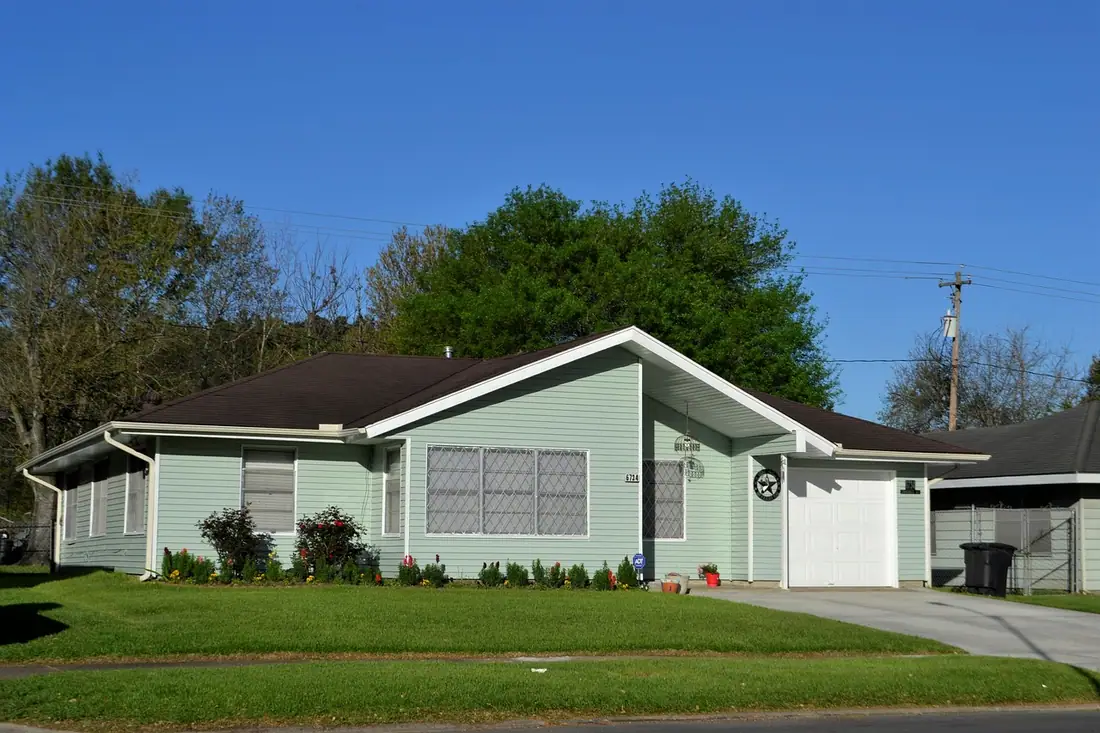
Property A is a single family house with $2,500 of insurance and no HOA. PITIA is $3,330 and the DSCR is 1.20.
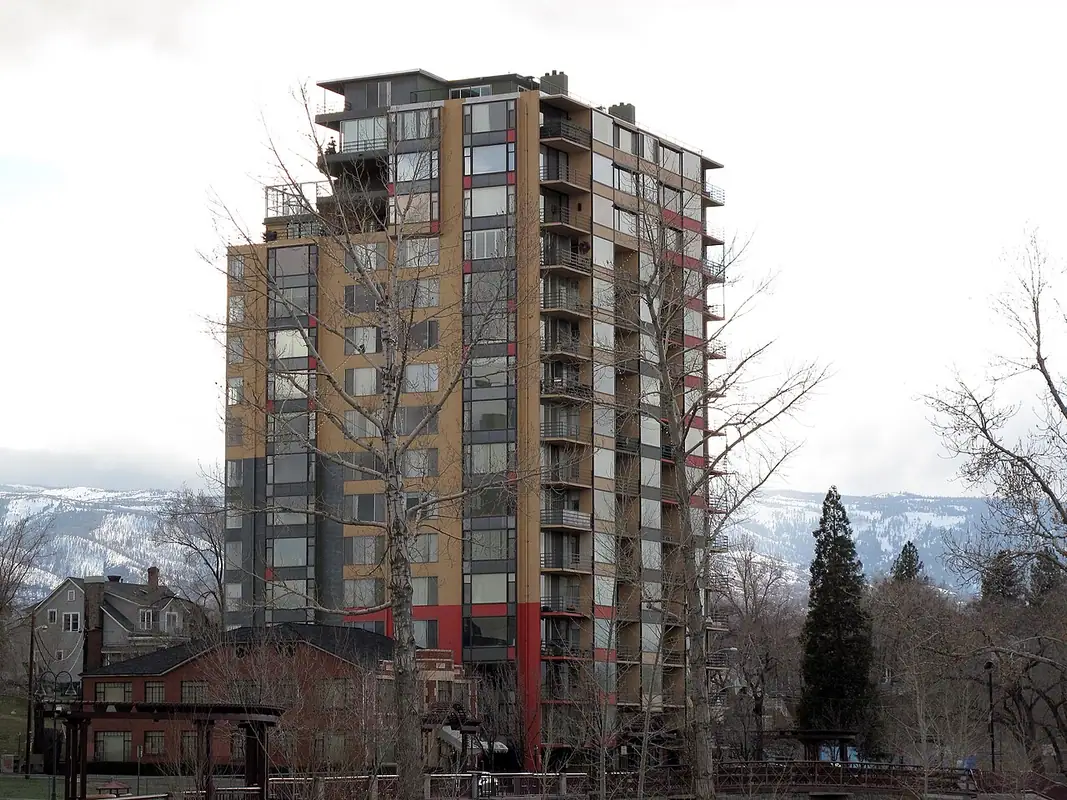
Property B is a condo with $300 a month of dues and a $4,500 premium in a wind exposed coastal county. Monthly insurance is $375 instead of $208. PITIA is $2,622 plus $500 plus $375 plus $300, or $3,797. The DSCR is $4,000 / $3,797 = 1.05.
Same rent, same loan, same price. The ratio dropped 0.15 because of two lines that have nothing to do with the mortgage. At 1.20 most lenders price normally. At 1.05 you are near the floor, and some programs will cut the loan amount or pass.
Match your inputs to the lender’s worksheet
Four lines cause most of the disagreements.
Taxes: on a purchase, many counties reassess at the sale price. The seller’s bill can sit far below what you will pay. Careful lenders estimate from the new price, so you should too.
Insurance: use a real quote in your name with your deductible, not the seller’s premium.
HOA: take the number from the association’s dues statement, and ask whether a special assessment is pending.
Rent: the lease and the appraiser’s market rent are both candidates, and the lower one usually wins.
One more question is worth asking. If the loan has an interest only period, does the lender qualify on the interest only payment or the amortizing one? That single choice moves the ratio more than any expense line on the page.
Run your own property through it
The DSCR Loan Calculator on the home page gives each of these lines its own field, taxes, insurance and dues included, so you can see which one is holding your ratio down. Change the insurance figure, add dues, and watch the number move.
Frequently asked questions
Does DSCR include taxes and insurance?
Yes. On a residential DSCR loan the denominator is PITIA, which is principal, interest, taxes, insurance and association dues. Lenders usually escrow taxes and insurance and pay those bills for you, so they count as part of the monthly obligation. Leaving them out is the most common reason a borrower's ratio comes out higher than the underwriter's.
Does DSCR include principal and interest?
Yes, both. Residential DSCR divides gross monthly rent by the full payment, and principal and interest is the largest part of it. The exception is an interest only loan. Some lenders qualify on the interest only payment, which is smaller and raises the ratio, and others qualify on the amortizing payment. Ask which one your program uses.
What does PITIA mean?
PITIA stands for principal, interest, taxes, insurance and association dues, all stated monthly. It is PITI with HOA or condo dues added on. DSCR lenders quote PITIA because dues are a required payment that can become a lien if nobody pays them. On a property with no association, PITIA and PITI are the same number.
Does DSCR include CapEx?
No. Capital expenditure for a roof, HVAC or windows is not a line in the DSCR formula, on either side of it. The ratio is a payment test, not a profit test. CapEx still reaches your file through reserve requirements and appraisal conditions, and it affects your real return, so budget for it outside the ratio.
Is DSCR based on gross rent or net rent?
Residential DSCR uses gross rent, meaning the lease rent or the appraiser's market rent before any expense. Commercial DSCR uses net operating income, which is rent after vacancy, management, repairs, taxes and insurance, divided by annual principal and interest. The same property scores higher on the residential version. Ask which formula produced any ratio you were quoted.